

NAIROBI, Kenya — Africa’s ability to solve its own health and development challenges could be at risk if governments continue to underinvest in research, science and innovation, stakeholders have warned.
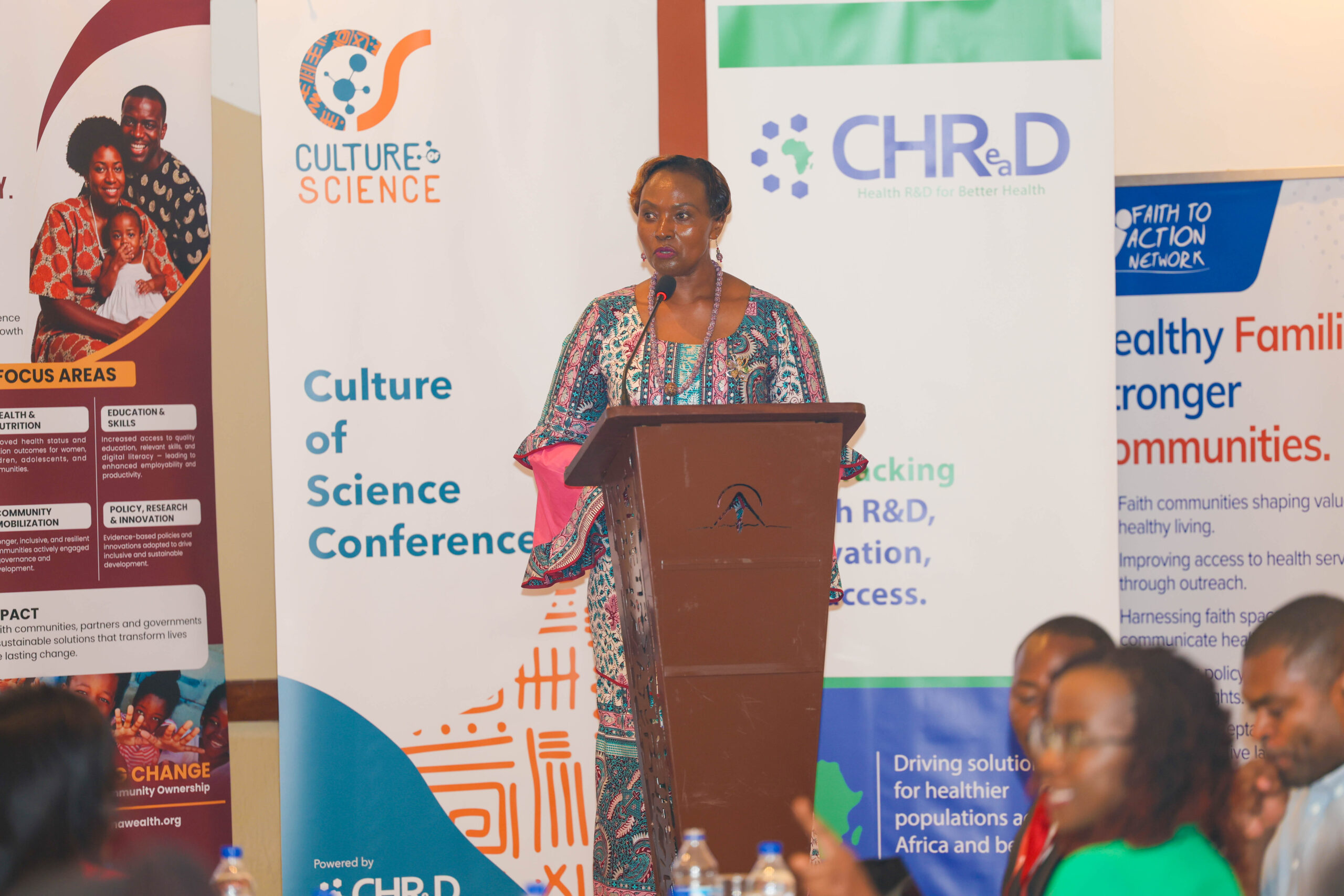
Speaking in Nairobi on behalf of the Coalition for Health Research and Development (CHReaD), Mary Muia, Chair of the CHReaD Steering Committee, said most African governments invest an average of just 0.5 percent of their GDP in research and development, against the 1 percent target set by the African Union’s Algiers Declaration.
“The majority of African governments invest an average of 0.5 percent of GDP in research and development, against the 1 percent target set by the African Union’s Algiers Declaration. Only three countries currently meet the Abuja Declaration’s commitment of allocating 15 percent of national budgets to health,” said Muia.
The figures were highlighted during the Culture of Science Conference 2026, where researchers, policymakers and other stakeholders called for greater domestic investment in science, stronger regulatory systems, increased local manufacturing of medicines and diagnostics, and closer collaboration between governments, researchers, industry and communities.
“Science cannot thrive without sustainable investment,” Muia said, stressing the need for African countries to strengthen their capacity to generate and use their own scientific knowledge and innovations.
The three-day conference, held from September 8 to 10 at the Ole Sereni Hotel in Nairobi, was convened by CHReaD in partnership with Speak Up Africa, Amref Health Africa, the Africa Health Research, Innovation and Development Alliance (AHRIDA), and Faith to Action Network.
Held under the theme “Shaping Africa’s Future through Science,” the conference brought together policymakers, researchers, financiers, regulators, innovators, educators, young people, journalists and civil society representatives from across the continent.
At the center of the discussions was a persistent challenge: Africa is still spending too little on the science needed to address its own problems. The consequences extend beyond laboratories and universities.
Limited research funding can determine what African researchers can investigate, what innovations can be developed, what medicines and technologies can be manufactured locally and, ultimately, what solutions reach communities.
CHReaD wants African countries to reduce this dependence by building systems that are locally financed, researched, regulated, manufactured and trusted.
Across three thematic days, financing and governing science, executing and innovating science, and embedding and sustaining science, participants examined what is needed to strengthen Africa’s scientific ecosystem.
A key proposal was for governments to create ring-fenced budget lines for research and development and raise domestic R&D spending to at least 1 percent of GDP. The coalition also called on governments to work toward the Abuja Declaration target of allocating 15 percent of annual national budgets to health.
Participants identified fragmented regulatory systems as another major barrier to bringing medicines, diagnostics and other health technologies to the people who need them.
The African Medicines Agency is working toward harmonizing regulatory reviews across Africa’s Regional Economic Communities. CHReaD is calling for this process to be accelerated, with harmonized regulatory standards fully operational across the regions by 2030.
The coalition is also calling for functional national regulatory authorities across all African Union member states, with at least 10 reaching World Health Organization (WHO) Maturity Level 3.
For innovators, more predictable regulatory systems could help move promising ideas from laboratories into hospitals and communities without compromising safety.
Local manufacturing was another priority. CHReaD called on pharmaceutical manufacturers, AUDA-NEPAD and procurement partners to work toward producing 50 percent of Africa’s pharmaceutical needs locally by 2030.
It also called for increased local procurement of priority diagnostics and medical devices. The push is aimed at reducing Africa’s dependence on imported health products while strengthening the continent’s ability to respond to future health emergencies.
The conference also explored how science is changing beyond traditional laboratories and research institutions. Participants discussed artificial intelligence in healthcare, genomics, traditional and alternative medicine, education and the future health workforce, as well as the relationship between faith and science.
Communities, women, young people and faith leaders were recognized as important voices in shaping Africa’s science agenda, rather than simply being recipients of scientific solutions.
Artificial intelligence and other emerging technologies also raised questions about how regulators can keep pace with innovation.
CHReaD called on African countries to establish health-focused regulatory sandboxes where AI, digital health and biotechnology innovations can be tested safely while regulators develop appropriate oversight systems.
The aim is to create room for innovation while protecting patients, data and public trust. That trust, participants noted, is critical. Scientific evidence can have little impact if it is poorly communicated or fails to connect with the communities it is intended to serve.
CHReaD therefore called for stronger collaboration between traditional institutions, media organizations and science communicators. The coalition also proposed continuing the science journalism engagement established during the conference on a monthly basis from 2027, rather than allowing science coverage to remain largely event-driven.
The coalition further called on members of Parliament to establish science and research caucuses at national and regional levels to keep science and research higher on the political agenda.
It also urged the private sector, philanthropists and foundations to establish coordinated mechanisms to align investments in health research, development and innovation. For CHReaD, the conference message was clear: science needs to move closer to the centre of Africa’s development agenda.
The coalition committed to advocating for accountable financing, an enabling regulatory environment, improved access to health products and technologies, and the sharing of evidence-based science and indigenous knowledge.
It also pledged to continue advancing the Culture of Science agenda through communities, partners and other stakeholders.
The challenge now is turning the conference commitments into action. For a continent confronting complex health challenges, climate change, food insecurity and rapidly changing technologies, participants argued that investment in science can no longer be treated as an optional expense.
It is increasingly about Africa’s ability to develop, produce and trust solutions to its own problems and ultimately determine its own future.